
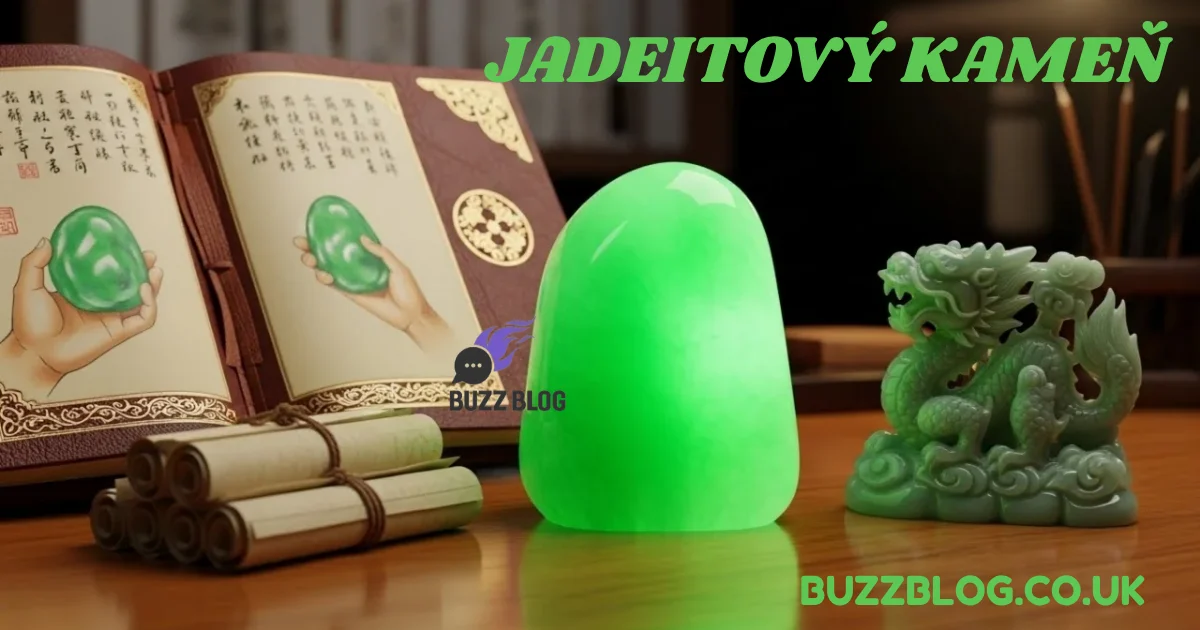
Understanding What Jadeitový Kameň Really Is
The phrase Jadeitový Kameň simply refers to jadeite stone, but don’t let that simple translation fool you. In the luxury gemstone world, jadeite occupies a very particular throne. People often use the word jade as if it describes a single mineral, but gemologists know better. True jade is divided into two entirely different minerals: jadeite and nephrite. Jadeite is rarer, harder, and significantly more valuable when high quality. That distinction alone is the difference between a decorative stone and a collectible luxury asset.
Geologically, jadeite is a sodium aluminum pyroxene mineral formed under very high pressure and relatively low temperature deep inside subduction zones. That means nature creates it under unusually dramatic circumstances. Think of it as a gemstone born where tectonic plates wrestle underground. The finest gem-grade jadeite is strongly associated with Myanmar, whose deposits have historically supplied the global luxury market. This origin matters because provenance affects price, reputation, and collector confidence.
A lot of first-time buyers assume jadeite is all about green color. That’s only part of the story. Premium jadeite is judged by an intricate combination of translucency, saturation, texture, grain structure, and uniformity. The most admired stones almost appear to glow from within. That inner watery luminosity—often called “water” in the trade—is what separates exceptional jadeite from average material. Two stones can look similarly green from a distance, but under close inspection, one may be worth twenty times more than the other.
That’s why Jadeitový Kameň is not merely jewelry material. It sits at the crossroads of geology, art, culture, and capital. It can be worn, inherited, collected, and traded. Few luxury stones manage to do all four with such authority.
Jadeite vs Traditional Jade
When people say “jade,” they often imagine one category. In reality, jadeite and nephrite are cousins, not twins. Nephrite is older in Chinese civilization and historically more widespread. Jadeite, however, rose to major prominence later because of its vivid colors and greater translucency. That’s what changed the market forever.
Nephrite Jadeitový kameň often has a softer, waxier appearance. Jadeite can exhibit a brighter, sharper brilliance. In collector circles, premium jadeite occupies a luxury tier similar to top-grade emeralds or exceptional sapphires. This distinction matters because buyers who don’t understand it often overpay for lower-grade material marketed loosely as “jade.”
Why Jadeite Became a Luxury Stone
Luxury is not just about beauty. Luxury begins where scarcity meets desire. That perfectly explains why jadeite became one of the most coveted stones in the world. High-quality jadeite is rare at multiple levels. First, suitable raw material is limited. Second, only a small fraction of rough jadeite yields fine gem-quality sections. Third, carving or cutting the stone introduces risk because flaws hidden inside can ruin value instantly.
The market especially rewards fine translucency and rich color saturation. The famous imperial green jadeite is the benchmark. Its vivid emerald-like tone, combined with glassy translucency, places it at the summit of jadeite pricing. It’s not unusual for collectors to compare elite jadeite with museum-level colored gemstones.
Current auction data reinforces that reputation. A natural imperial green jadeite cabochon sold for CNY 18.5 million in late 2025, while a Myanmar natural full green jadeite bangle reached CNY 15.2 million, according to recent auction tracking. Those numbers are not random spikes. They reflect sustained demand among affluent collectors who increasingly view jadeite as a blend of adornment and portable heritage.
A revealing insight from recent auction activity is that buyers are becoming more selective. Color alone no longer guarantees extraordinary value. Collectors now focus intensely on texture, internal clarity, certification, and provenance. In other words, the market is maturing. It’s becoming less emotional and more connoisseur-driven.
Why Imperial Green Commands Premium Prices
Why does imperial green matter so much? Because in jadeite, color behaves like language. Imperial green speaks fluently. It combines vivid saturation, even distribution, and life-like luminosity. A flat green stone can look pleasant. A living green stone can stop a room.
That is why elite collectors pay astonishing premiums. It’s not just the green itself—it’s the way the green interacts with light, depth, and transparency.
Historical Heritage of Jadeitový Kameň
If you want to understand jadeite’s modern luxury status, you have to walk backward through history. Jadeite’s rise was not accidental—it was imperial. While nephrite had dominated Chinese ceremonial culture for millennia, jadeite entered elite consciousness more dramatically during the Qing Dynasty period.
The major supply route ran from the jade mines of Myanmar into southwestern China, especially through Yunnan. Trade expanded, and imperial workshops began to favor jadeite for decorative and symbolic works. Its vibrant color palette distinguished it from traditional nephrite, giving aristocrats something visually fresh yet culturally meaningful.
Under imperial patronage, jadeite quickly transformed from imported curiosity into status language. Rings, bangles, plaques, pendants, ritual objects—these were not just accessories. They were social signals. Possessing fine jadeite meant proximity to wealth, sophistication, and often political influence.
A useful way to think about it is this: diamonds became Western dynastic symbols, while jadeite became an East Asian aristocratic signature. That cultural prestige still influences today’s market. Collectors are not simply buying mineral matter; they are buying a connection to centuries of symbolism and elite patronage.
Recent sales of antique and carved jadeite pieces continue to echo this heritage. A carved apple-green jadeite figural group sold for $20,000 at Heritage Auctions in September 2025, while other carved historic jadeite works attracted strong bidding interest. The message is clear: heritage still carries monetary power.
Symbolism and Cultural Meaning
Jadeite’s cultural power cannot be measured only in auction currency. Across much of East Asia, jadeite has long symbolized purity, prosperity, harmony, and protection. A jadeite bangle is not always bought because it matches an outfit. Sometimes it is purchased because it represents continuity, blessing, and familial care.
The circular bangle is especially symbolic. Its unbroken form evokes eternity and unity. Even today, gifting jadeite jewelry often marks marriage, inheritance, or major life transitions. In that sense, jadeite behaves differently from many luxury stones. It is deeply emotional.
There is something fascinating here. Diamonds often communicate external status. Jadeite often communicates internal meaning. That distinction matters. It helps explain why buyers can remain loyal to jadeite even when speculative markets cool. Cultural value creates resilience.
As one recent auction description noted, hololith jade bangles carved from a single piece historically represented harmony, protection, and elite craftsmanship. That symbolism continues to influence how collectors and families view jadeite today.
Modern Global Jadeite Market
The modern jadeite market is alive, selective, and increasingly sophisticated. The center of gravity remains firmly in Hong Kong, mainland China, and broader Asian luxury circles, but interest has expanded globally.
Recent auction tracking shows how dynamic pricing has become:
| Recent Jadeite Sale | Date | Price |
|---|---|---|
| Natural Imperial Green Jadeite Cabochon | Nov 2025 | CNY 18.5 million |
| Myanmar Natural Full Green Jadeite Bangle | Nov 2025 | CNY 15.2 million |
| Icy Lavender Jadeite Necklace | Dec 2025 | CNY 9.8 million |
What’s especially interesting is the diversification of demand. Historically, buyers focused heavily on saturated green jadeite. Today, collectors also pursue icy jadeite, lavender jadeite, and unusual carved pieces with documented provenance. That signals a broader, more mature market.
The Financial Times recently highlighted how Asian jewelry auctions are increasingly driven by connoisseurship rather than pure brand prestige. Collectors now prioritize craftsmanship, individuality, and historical resonance. That trend directly benefits high-quality jadeite.
Regional Demand
In Asia, jadeite remains emotionally and culturally central.
In Europe, jadeite often attracts design-oriented buyers who value antique craftsmanship.
In North America, demand has grown through auctions, niche dealers, and online collector communities, though education gaps still create pricing inconsistencies.
The internet has also widened the market—but with that expansion comes danger.
How Experts Evaluate Jadeite
If jadeite pricing sometimes feels mysterious, that’s because it is. Unlike diamonds, there is no universal formula. Experts evaluate multiple qualities at once.
Color, Texture, and Translucency
The highest value usually comes from a careful balance of:
- Color saturation
- Even color distribution
- Fine-grained texture
- High translucency
- Minimal visible flaws
A coarse but green stone can still be relatively inexpensive. A translucent, fine-grained stone with moderate color can command dramatically higher prices.
Think of it like comparing paint and stained glass. One simply shows color. The other lets light live inside it.
Type A, Type B, and Type C Jadeite
This is crucial for anyone buying jadeite.
| Jadeite Type | Meaning | Collector Preference |
|---|---|---|
| Type A | Natural jadeite, untreated except waxing | Highest |
| Type B | Bleached and polymer impregnated | Lower |
| Type C | Dyed jadeite | Lowest |
Recent sales from Bonhams, Sotheby’s, and Heritage Auctions repeatedly emphasize Type A certification as a premium value marker.
That tells you something powerful: in the jadeite market, authenticity is value.
Investment Potential of Jadeitový Kameň
Can jadeite be an investment? Yes—but only if you understand what you are doing.
The best jadeite behaves less like a commodity and more like fine art. Price appreciation depends on rarity, provenance, untreated condition, and collector demand. Exceptional stones have shown remarkable resilience over time, especially elite Type A jadeite with outstanding color and translucency.
But jadeite is not a simple “buy low, sell high” market. Pricing is highly nuanced. Two visually similar pieces can have dramatically different market outcomes depending on subtle differences invisible to casual buyers.
Recent community discussions also show a softer secondary market in some segments, especially for commercial-grade jadeite, while truly exceptional material remains highly competitive. That split is important. The middle market can wobble. The very top often stays surprisingly firm.
A practical rule? Buy the best quality you can verify, not the cheapest color you can find.
Authenticity Risks in Today’s Luxury Market
Here’s the uncomfortable truth: jadeite is one of the easiest luxury stones to misunderstand and one of the easiest markets in which inexperienced buyers can lose money.
Recent buyer discussions repeatedly mention treated jadeite, dyed material, quartz imitations, glass substitutes, and misleading online sellers. This is not a fringe issue. It’s central to the modern jadeite market.
That is why serious buyers insist on certification from respected laboratories such as Gemological Institute of America or reputable regional jade laboratories. Certification cannot replace expertise, but it dramatically reduces avoidable risk.
If you remember only one thing, remember this: a certificate does not make a stone beautiful, but it helps confirm whether beauty is real.
Conclusion
Jadeitový Kameň is more than a luxury gemstone. It is a rare fusion of mineral science, dynastic heritage, artistic craftsmanship, emotional symbolism, and modern financial interest.
Its market today is sharper, more educated, and more selective than ever before. Recent auction results prove that elite jadeite continues to command remarkable prices, especially when color, translucency, provenance, and authenticity align. At the same time, the market has become less forgiving toward mediocre or treated material.
That’s really the essence of jadeite. It rewards knowledge. It punishes assumptions.
A truly fine jadeite stone does something unusual. It doesn’t merely sparkle. It carries history in silence.