
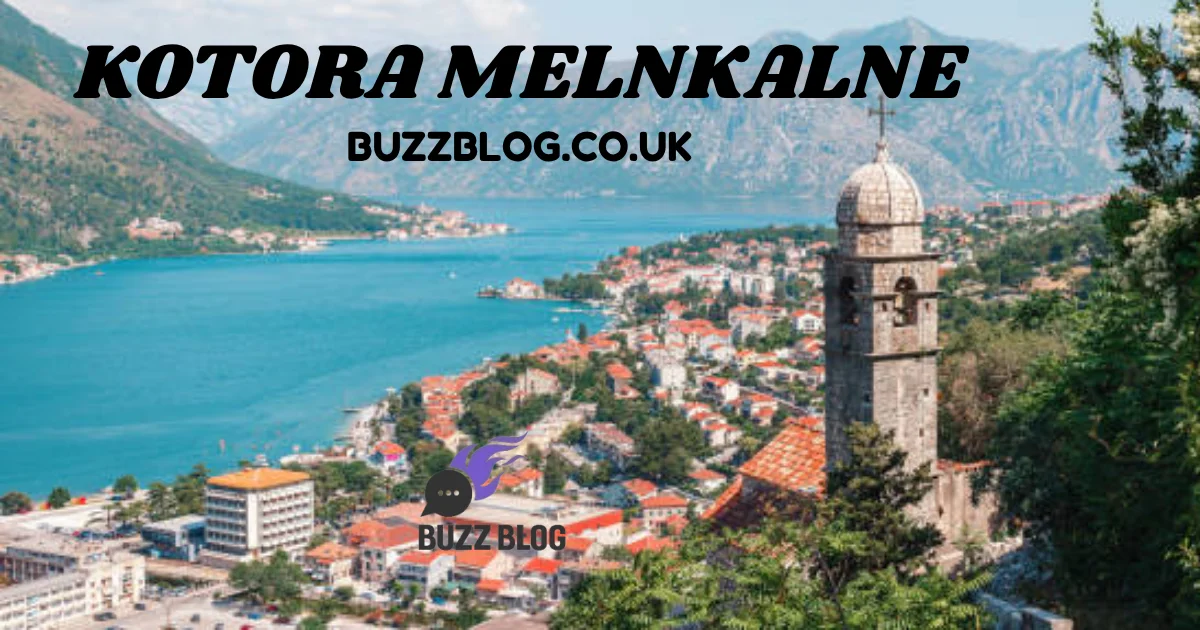
Few places in Europe manage to feel both cinematic and intimate at the same time. Kotor—often rendered in some regional languages as kotora melnkalne refers to Montenegro—is one of those rare destinations. Tucked into the dramatic embrace of the Bay of Kotor, this fortified Adriatic town looks less like something built and more like something painted. Travelers don’t simply arrive here; they enter a setting where limestone mountains drop into cobalt water, church bells echo through medieval alleys, and every corner feels as if it has been holding stories for centuries.
Recent tourism figures underline just how magnetic Kotor has become. A 2025 academic study reported that Kotor received 586,403 cruise passengers and 476 ship calls in 2024, a striking number for a relatively small historic town. That same study also noted the contrast between high day-visitor volume and more modest overnight stays, which is one of the defining dynamics shaping modern Kotor tourism.
Before diving into the article, here’s the roadmap.
Where Kotora Melnkalne Sits on the Adriatic Map
Kotor is not just another pretty coastal town. It occupies one of the most dramatic natural settings anywhere on the Adriatic. Located in southwestern Montenegro, the town rests deep inside the Bay of Kotor, a winding body of water often mistaken for a fjord, though technically it is a submerged river canyon. That distinction may sound academic, but the feeling is what matters. As the road curves around the bay, mountains rise almost vertically from the shoreline, creating a visual tension that makes the entire region feel theatrical.
The Geography of the Bay of Kotor
The Bay of Kotor is made up of several smaller connected bays, each with its own mood. One minute the landscape feels open and sun-washed, and the next it narrows into steep rocky corridors that funnel the eye toward the sea. That constant visual compression and release is part of why visitors find the area so unforgettable. You’re never just looking at water—you’re looking at a giant amphitheater of cliffs, villages, bell towers, and stone quays.
Why the Location Feels Almost Unreal
There are destinations that photograph well, and then there are places that feel oddly impossible in person. Kotor belongs in the second category. The scale is what tricks the senses. Medieval walls snake up a mountain so steep they seem drawn rather than built. Morning light can turn the bay silver, while late afternoon paints it in deep blues and pale gold. That blend of geography and architecture is the secret ingredient. It is not merely scenic; it feels staged by nature itself.
A Town Built by Centuries
Kotor’s beauty is not accidental. It is the product of centuries of layered history. The town has roots stretching back to Roman times, but much of the identity travelers experience today was shaped during the medieval and Venetian periods. That long timeline matters because Kotor does not feel preserved in a museum-like way. It feels lived in. Laundry still hangs from old stone windows. Small cafés occupy spaces once used by merchants, sailors, and guilds.
Medieval Foundations
By the Middle Ages, Kotor had grown into an important trading and maritime center on the Adriatic. Its strategic position made it valuable and vulnerable at the same time. That is why fortifications became such a defining feature. The walls surrounding the old town are not decorative relics; they were instruments of survival. Walking beside them today gives you a sense of how urban life and defense once existed side by side.
Venetian Influence in Stone
The long influence of the Republic of Venice still defines Kotor’s visual language. Arched windows, narrow lanes, carved coats of arms, and elegant civic squares all carry Venetian fingerprints. It is one reason travelers often compare Kotor with Dubrovnik, though Kotor feels more intimate and less theatrical. If Dubrovnik is a grand stage, Kotor is a whispered conversation. Every stone surface seems to hold salt, wind, and memory.
The Old Town Experience
The heart of Kotor is its UNESCO-listed old town, officially part of the Natural and Culturo-Historical Region of Kotor. Enter through one of the ancient gates and the atmosphere changes instantly. The world narrows. Cars disappear. The rhythm slows. Stone alleys twist in ways that seem intentionally disorienting, almost as if the city was designed to reward wandering rather than planning.
Walking Through the Labyrinth
There is no correct route through the old town, and that is precisely why it works. You turn a corner and find a small square. Another turn reveals a church façade. Another leads to a cat asleep on warm limestone. Kotor’s famous cats have become an unofficial emblem of the town, and oddly enough, they fit perfectly into the mood—unhurried, self-possessed, and entirely at home.
Squares, Gates, and Hidden Corners
The squares act like little breathing spaces inside the maze. Some are lively, lined with cafés and conversation. Others feel almost private. The contrast keeps the walk engaging. It’s the urban equivalent of reading a novel with unexpected pauses. What makes Kotor special is not a single monument; it is the choreography of tiny moments.
The Living Atmosphere of the Walled City
Kotor’s old town still functions as a living neighborhood. That matters more than people often realize. The scent of coffee in the morning, footsteps on stone, a bell marking the hour—these details create emotional texture. You’re not just observing history. You’re moving through a place where history still shares space with ordinary daily life.
The Climb That Defines Kotor
Ask anyone who has really experienced Kotor and one image usually comes up: the climb to San Giovanni Fortress. It is demanding enough to feel like an achievement but accessible enough that many visitors attempt it. The route follows a steep staircase that threads up the mountainside above town.
San Giovanni Fortress
The climb is famous for a reason. It isn’t simply about reaching the top. It’s about how the perspective changes with every few dozen steps. The old town becomes smaller. The bay widens. Roofs flatten into geometry. Boats turn into tiny white strokes on dark blue water.
What the View Really Feels Like
At the summit, Kotor reveals itself fully. This is not just a nice panorama. It is the kind of view that rearranges your internal sense of scale. Mountains feel larger, the town feels older, and the bay suddenly explains why this place mattered so much historically. One Reddit traveler described the climb as offering “brilliant views almost all the way up,” and that community sentiment echoes again and again among recent visitors.
The Bay Beyond the Walls
Kotor is the anchor, but the surrounding bay completes the experience. To understand Kotora Melnkalne, you need to move beyond the walls and into the water-framed villages that ring the bay.
Perast and the Islands
A short distance from Kotor lies Perast, a small baroque town that feels almost suspended outside of time. Its waterfront is quieter, more delicate, more contemplative. From Perast, boats glide toward Our Lady of the Rocks, one of the Adriatic’s most iconic tiny islands. Travelers often describe this part of the bay as dreamlike because it strips away urban noise and leaves only stone, water, and sky.
The Adriatic’s Calmest Drama
What makes the bay unforgettable is its calmness. The water often appears almost glass-like, yet the mountains around it create intense visual drama. It is like listening to a powerful orchestra playing softly. That tension—between stillness and scale—is what gives the bay its emotional pull.
Culture, Food, and Everyday Life
Kotor’s appeal is not only architectural. It is deeply sensory. If you stay long enough, you start noticing the rhythms that guide local life. Morning espresso. Afternoon heat. Evening promenades along the waterfront.
Local Flavors
Montenegrin coastal cuisine draws from both Balkan and Mediterranean traditions. Fresh seafood, olive oil, local cheese, grilled fish, octopus salad, and slow-cooked meat dishes all appear regularly. The food here usually avoids unnecessary complexity. Ingredients do the work. It’s honest cooking, shaped by geography.
| Dish | What to Expect |
|---|---|
| Black Risotto | Squid ink rice with rich Adriatic flavor |
| Grilled Sea Bream | Fresh, simple, and often caught locally |
| Njeguški Pršut | Montenegro’s famous cured ham |
| Buzara-style Mussels | Shellfish cooked with garlic, wine, and herbs |
Festivals and Seaside Rhythm
Summer in kotora melnkalne brings music, open-air performances, and cultural events that fill old stone squares with life. Yet even outside festival season, the town has rhythm. It doesn’t rush. It moves like the tide—steady, predictable, and deeply connected to place.
Tourism in 2025 and Why Kotor Matters More Than Ever
kotora melnkalne popularity is no longer a secret. It has become one of the most visible destinations in Montenegro, and recent numbers prove it.
Current Visitor Trends
A 2025 academic study noted 586,403 cruise passengers in 2024, while local reporting in 2025 frequently showed weekly day-tripper counts near 19,000 during peak periods. That means Kotor can feel intensely busy, especially when cruise ships arrive.
At the national level, Montenegro’s tourism remains strong. Data reported in 2026 showed tourist arrivals in the country rising 2.4% year-on-year in March 2026, indicating continued momentum in the wider travel market.
Sustainable Travel in a Small Historic City
kotora melnkalne biggest challenge is not attracting visitors—it is absorbing them without losing its soul. That is the paradox of beauty. The more people discover it, the harder it becomes to preserve the intimacy that made it special. Sustainable travel here is simple in theory: stay overnight instead of rushing through, visit outside peak cruise hours, and spend money locally. Those small choices matter.
As author Tena Božović notes in the 2025 sustainability study, Kotor’s tourism pressures are increasingly linked to the imbalance between day visitors and overnight guests. That observation captures the city’s present moment perfectly.
How to Experience Kotora Melnkalne the Right Way
A place like Kotor rewards timing and pace.
Best Time to Visit
Late spring and early autumn are often ideal. You still get warm weather and long daylight, but without the heaviest summer congestion. July and August deliver maximum energy, but also maximum crowds. If you want to feel the town rather than simply photograph it, shoulder season is the smarter choice.
Practical Travel Tips
A few choices can transform the experience:
- Arrive early in the old town before cruise-day crowds build.
- Climb to San Giovanni Fortress either early morning or near sunset.
- Spend at least one night instead of treating Kotor as a quick stop.
- Use Kotor as a base for exploring Perast, Tivat, and the surrounding bay.
Kotor is not a destination best consumed quickly. It is better approached like a slow-burning novel—something that reveals itself page by page.
Conclusion
Kotora Melnkalne is more than a beautiful stop on the Adriatic. It is one of those rare places where geography, history, and atmosphere work together so seamlessly that separating them becomes impossible. The mountains amplify the sea. The sea softens the stone. The stone preserves centuries of human ambition, faith, and resilience.
What makes Kotor unforgettable is not just its postcard beauty. It is the way the place feels emotionally coherent. Nothing seems out of tune. The old walls, the church bells, the bay, the cats, the stairways, the evening light—they all belong to the same quiet composition.
And that may be Kotor’s real magic. It doesn’t try to impress you. It simply exists with such confidence that sooner or later, it gets under your skin.