
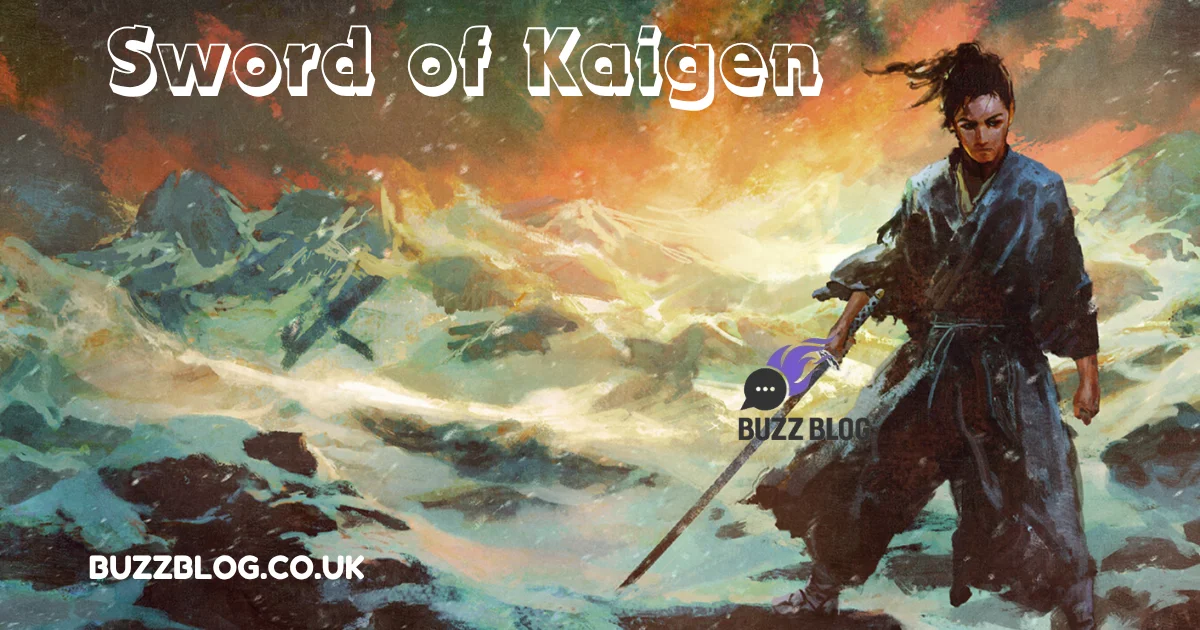
Epic fantasy has never been more crowded. Every year, shelves overflow with sprawling sagas, morally gray heroes, magical wars, and kingdoms hanging by a thread. Readers have endless options, from dragon-filled adventures to grimdark political nightmares. Yet somehow, The Sword of Kaigen by M.L. Wang continues to rise above the noise years after its release. Fans still recommend it passionately, book clubs still debate it fiercely, and social media communities continue calling it one of the most emotionally devastating fantasy novels ever written.
So what makes this novel different?
The answer isn’t just the ice magic, the Japanese-inspired setting, or the spectacular battle scenes. Plenty of fantasy books offer exciting combat and rich world-building. What truly separates The Sword of Kaigen from modern epic fantasy is its emotional honesty. This is a story that slices deeper than swords ever could. It examines grief, nationalism, parenthood, trauma, identity, and sacrifice with unusual maturity. Instead of focusing solely on kings and chosen ones, it zooms into a family struggling to survive both external war and internal wounds.
The novel also takes risks most fantasy writers avoid. It breaks traditional narrative structure, centers motherhood in a genre dominated by youthful heroes, and refuses to give readers easy emotional escapes. Some readers even criticize its unconventional pacing and structure, yet many argue those exact qualities make it unforgettable.
This article explores exactly why The Sword of Kaigen stands out among modern epic fantasy novels and why readers continue to place it alongside genre-defining classics.
The Rise of Modern Epic Fantasy
Epic fantasy used to revolve around a familiar formula. A young farm boy discovered hidden powers, evil threatened the kingdom, and an ancient prophecy pointed toward salvation. Readers loved these stories for decades because they offered adventure, escapism, and clear battles between good and evil. But modern fantasy audiences want more than grand battles and magical artifacts. They want emotional realism. They want characters who feel painfully human. That shift in reader expectations created space for books like The Sword of Kaigen to flourish.
Over the last decade, fantasy has become far more intimate and psychologically layered. Books such as The Poppy War and Jade City proved that readers are hungry for stories rooted in culture, trauma, politics, and identity rather than recycled medieval European tropes. Fantasy fans increasingly seek narratives that feel emotionally authentic even when dragons, magic, or supernatural powers exist. The genre has matured in the same way superhero films evolved from simple action flicks into character-driven stories exploring grief, guilt, and moral complexity.
That’s exactly where The Sword of Kaigen thrives. It delivers everything fantasy readers expect—spectacular combat, elemental magic, military conflict, and intricate lore—but wraps those elements inside deeply personal struggles. The book feels less like a distant myth and more like watching a family survive catastrophe in real time. Readers aren’t just entertained; they are emotionally wrecked by the end.
What’s fascinating is that many fans describe the book as unforgettable not because of its world-building but because of how it made them feel. Reddit discussions repeatedly praise the emotional fallout, character work, and unconventional structure. In a genre saturated with interchangeable fantasy kingdoms, emotional impact becomes the true differentiator.
The Unique Premise of The Sword of Kaigen
At first glance, The Sword of Kaigen seems like a traditional military fantasy novel. A remote peninsula filled with elite warriors defends an empire using elemental ice powers and legendary combat techniques. Young fighters train rigorously to honor family legacies and protect their homeland. The setup sounds familiar enough for fantasy veterans. But the deeper readers go, the more the story transforms into something far richer and more unsettling.
The Japanese-inspired setting immediately gives the novel a distinctive identity. Instead of copying medieval Europe for the thousandth time, M.L. Wang builds a world influenced by Japanese culture, martial traditions, and social structures. Snow-covered mountains, disciplined warrior clans, and deeply ingrained honor systems create an atmosphere that feels immersive without becoming a shallow imitation of real-world history. Critics and reviewers consistently praise the authenticity and detail of the setting.
One of the novel’s smartest creative choices is the collision between ancient traditions and modern technology. The world contains smartphones, aircraft, propaganda systems, and modern warfare alongside elemental magic and clan-based combat traditions. That blend creates a strange but fascinating tension. It feels like watching samurai culture collide headfirst with the information age. The result is a fantasy world that mirrors real societies wrestling with modernization, nationalism, and technological dependence.
This mixture also strengthens one of the book’s major themes: propaganda. Characters slowly realize much of their education and worldview has been manipulated by the empire they serve. That revelation transforms the novel from a simple war story into an exploration of political control and manufactured truth. The fantasy setting becomes a mirror reflecting real-world anxieties about governments, media narratives, and blind patriotism.
Unlike many fantasy novels where world-building exists mainly for spectacle, every detail in The Sword of Kaigen reinforces character psychology and thematic depth. The setting isn’t wallpaper. It actively shapes the characters’ identities, fears, and emotional conflicts.
Misaki Matsuda Is Unlike Typical Fantasy Heroes
Fantasy literature rarely centers mothers as primary protagonists. When mothers do appear, they are often background figures offering emotional support before disappearing from the narrative entirely. Misaki Matsuda destroys that stereotype. She is arguably one of the most compelling protagonists modern fantasy has produced because she feels startlingly real.
Misaki isn’t a teenage chosen one discovering hidden abilities. She isn’t a queen commanding armies or a morally detached assassin. She is a woman trapped between her violent past and her suffocating present. Once a fierce fighter, she abandoned her old life to become a dutiful wife and mother inside an intensely patriarchal society. That internal conflict fuels nearly every emotional moment in the novel.
Her struggles resonate because they feel grounded in universal human experience. Many readers understand what it feels like to bury parts of themselves to fit societal expectations. Misaki represents people who sacrificed dreams, passions, or identities to survive adulthood’s responsibilities. Her story becomes less about magic powers and more about reclaiming lost pieces of the self.
The decision to center an older female protagonist also gives the novel emotional maturity rarely found in epic fantasy. Misaki approaches conflict differently than impulsive teenage heroes. Her fears revolve around protecting children, preserving family stability, and surviving regret rather than chasing glory. Those priorities create emotional stakes that feel devastatingly personal.
Reviewers consistently praise Misaki as one of fantasy’s greatest female protagonists because of this complexity. She is powerful without becoming invincible. Vulnerable without becoming weak. Angry without losing empathy. Her emotional contradictions make her unforgettable.
Fantasy often worships youth, but The Sword of Kaigen argues that adulthood contains equally compelling battles. Sometimes the hardest war isn’t defeating monsters—it’s confronting the person you used to be.
Emotional Storytelling That Hits Hard
Many fantasy novels aim for emotional impact, but few achieve it with the raw intensity of The Sword of Kaigen. Readers frequently describe the book as heartbreaking, devastating, or emotionally exhausting. That reputation isn’t marketing hype. The novel genuinely earns its emotional power through patient character development and brutally honest storytelling.
One reason the emotions hit so hard is the book’s focus on aftermath rather than spectacle. Most fantasy stories climax with a giant battle and then quickly move toward celebration or resolution. The Sword of Kaigen spends significant time exploring grief, trauma, and survival after catastrophe. Characters don’t magically recover from loss because the plot demands forward momentum. They break apart slowly. They lash out. They mourn. They question everything they believed about themselves and their country.
That emotional realism gives the novel unusual weight. Trauma feels messy and ongoing rather than cinematic. Family conflict feels painfully authentic because characters love each other while simultaneously hurting each other. Even moments of reconciliation carry scars beneath them.
The book’s treatment of grief deserves particular praise. Rather than presenting grief as a temporary obstacle, the novel portrays it as a force that permanently reshapes identity. Characters must learn how to continue living while carrying unbearable emotional pain. That focus transforms the story into something far deeper than standard military fantasy.
Readers online often mention needing breaks while reading because the emotional intensity became overwhelming. That reaction speaks volumes about the novel’s effectiveness. Fantasy readers are accustomed to fictional deaths and dramatic battles, yet this book still manages to hit like a punch to the chest.
The emotional devastation works because the characters feel real long before tragedy strikes. The novel invests heavily in ordinary conversations, domestic moments, and family dynamics early on. Those quieter scenes build emotional foundations that make later events catastrophic rather than merely shocking.
The Magic System and Combat
Fantasy readers love innovative magic systems, and The Sword of Kaigen delivers one of the genre’s most visually exciting examples. The warriors of the Kusanagi Peninsula wield elemental powers centered around water and ice manipulation. They create blades from frozen air, shape oceans into weapons, and unleash attacks capable of devastating entire battlefields. The imagery feels cinematic from the very first combat sequence.
Many reviewers compare the elemental combat to Avatar: The Last Airbender because of its martial arts influence and fluid elemental manipulation. Yet the novel adds a brutal edge that distinguishes it from more family-friendly fantasy adventures. Combat here feels dangerous, visceral, and emotionally costly.
What truly elevates the action scenes is emotional context. Spectacular fights alone rarely create lasting impact. Readers have seen countless magical duels across fantasy literature. But in The Sword of Kaigen, battles matter because relationships matter. Characters fight not for abstract destiny but for family, identity, survival, and redemption.
M.L. Wang’s martial arts background also adds authenticity to combat choreography. Reviewers frequently praise how clear and kinetic the fight scenes feel. The action never becomes confusing visual noise. Every movement carries purpose and emotional tension.
The novel also avoids a common fantasy mistake: making powerful characters invulnerable. Even the strongest fighters face terrifying consequences. Injuries matter. Fear matters. Exhaustion matters. This vulnerability creates suspense because readers never feel certain characters will survive.
Interestingly, the magic system reflects the novel’s themes. Ice powers symbolize emotional restraint, discipline, and inherited legacy. Combat styles become extensions of cultural identity and family expectation. The magic isn’t just aesthetically cool—it reinforces the emotional architecture of the story itself.
Themes That Elevate the Novel
Beneath its battles and magical warfare, The Sword of Kaigen tackles surprisingly complex themes. This thematic richness is a major reason readers continue discussing the book years later. It doesn’t merely entertain; it provokes reflection.
One of the strongest themes is nationalism and propaganda. The people of Kaigen are raised to believe their nation is noble, righteous, and constantly threatened by enemies. Children are educated through distorted historical narratives designed to reinforce obedience and patriotism. As characters discover contradictions in official propaganda, the story begins questioning how societies manufacture loyalty and suppress dissent.
That theme feels deeply relevant in today’s political climate. Many readers recognize parallels to real-world governments shaping public perception through selective information. Fantasy becomes a lens for examining how ordinary people become trapped inside national myths.
Gender roles also play a central role in the novel. Misaki’s struggle reflects the suffocating expectations placed upon women inside patriarchal systems. She is expected to suppress ambition, violence, and independence to embody idealized femininity. Her emotional journey becomes a rebellion against those constraints.
The novel also explores generational trauma. Parents pass expectations, fears, and emotional damage onto children often without realizing it. The Matsuda family dynamics feel painfully authentic because love and harm coexist simultaneously. Characters genuinely care for each other while perpetuating destructive traditions.
Another fascinating theme is the tension between tradition and change. Kaigen’s society glorifies ancient warrior customs even as modern technology transforms warfare and communication. This conflict mirrors real societies wrestling with modernization and cultural preservation. The novel refuses simplistic answers. Tradition offers both meaning and oppression. Modernization offers both progress and alienation.
Fantasy becomes powerful when it reflects human reality through imaginative worlds. The Sword of Kaigen succeeds because its themes remain emotionally recognizable beneath the magic and warfare.
The Book’s Unconventional Structure
One reason The Sword of Kaigen feels so different from traditional fantasy novels is its unusual structure. Many readers expect a predictable rise toward a final climactic battle near the story’s end. Instead, the novel detonates emotionally halfway through and then spends the remaining pages exploring consequences.
This choice divided readers. Some praised it as bold and emotionally brilliant. Others found the pacing uneven or structurally strange. That division actually highlights the novel’s ambition. Safe books rarely inspire passionate debate.
The unconventional structure works because it prioritizes emotional realism over formula. Real trauma doesn’t end once the battle finishes. Survivors must continue living afterward. By dedicating substantial time to emotional aftermath, the novel achieves a depth many fantasy stories never attempt.
Readers accustomed to traditional fantasy pacing may initially feel disoriented. The narrative shifts focus dramatically after key events occur. But that discomfort mirrors the characters’ emotional disorientation. The structure itself becomes part of the storytelling experience.
Several Reddit discussions specifically praise this daring approach, arguing the aftermath sections make the novel unforgettable. Instead of racing toward triumphant resolution, the book lingers inside grief, guilt, and emotional reconstruction.
This structural risk also reinforces the novel’s central message: heroism is not confined to battlefield victories. Sometimes survival itself becomes heroic. Sometimes rebuilding emotional identity matters more than defeating enemies.
Fantasy literature often prioritizes external conflict over internal transformation. The Sword of Kaigen flips that balance. External war triggers emotional collapse, but the real story lies in how characters endure afterward.
Community Reception and Critical Praise
The fantasy community’s reaction to The Sword of Kaigen has been fascinating because it combines overwhelming admiration with honest criticism. Few modern fantasy novels generate such intense emotional responses from readers.
Many fans consider the book one of the best self-published fantasy novels ever written. Reviewers consistently praise its emotional depth, powerful character work, and stunning battle sequences. The novel also gained recognition through the Self-Published Fantasy Blog-Off, helping elevate its reputation within fantasy circles.
Online communities frequently describe the novel using emotionally charged language. Readers mention crying, needing emotional breaks, or feeling haunted by certain scenes long after finishing the book. That kind of response is difficult to manufacture artificially. It usually signals genuine emotional resonance.
At the same time, criticism exists. Some readers dislike the pacing, exposition, or connections to the larger Theonite universe. Others feel the book could benefit from tighter editing. Interestingly, even critical readers often acknowledge the emotional strength of key scenes and character arcs.
This mixture of praise and criticism actually strengthens the novel’s legacy. Perfectly polished books sometimes fade quickly because they never challenge readers emotionally or structurally. The Sword of Kaigen feels alive because readers continue debating its choices passionately.
The novel’s enduring popularity years after release also demonstrates its staying power. Many fantasy books explode briefly on social media before disappearing entirely. Yet The Sword of Kaigen keeps resurfacing in recommendation threads, reading challenges, and fantasy discussions.
That longevity suggests the book achieved something increasingly rare: genuine emotional memorability.
How The Sword of Kaigen Compares to Other Fantasy Giants
Fantasy readers often compare The Sword of Kaigen to other major modern works because it shares qualities with several beloved franchises while maintaining its own identity.
The most obvious comparison is The Poppy War. Both novels explore war, nationalism, trauma, and Asian-inspired settings. Both reject simplistic hero narratives and force readers to confront the psychological costs of violence. Yet The Sword of Kaigen feels more intimate and family-centered. While The Poppy War expands toward massive political conflict, Kaigen remains emotionally rooted inside one household.
Comparisons to Avatar: The Last Airbender usually focus on elemental combat and martial arts-inspired powers. But the emotional tone differs dramatically. Avatar balances darkness with optimism and humor. The Sword of Kaigen embraces grief and emotional devastation with far less restraint.
Some readers also compare the novel to grimdark fantasy because of its brutality and emotional intensity. Yet it never becomes cynical in the way grimdark fiction sometimes does. Beneath the suffering, the novel still believes human connection, forgiveness, and love matter deeply.
What truly distinguishes The Sword of Kaigen from many fantasy giants is its focus on emotional aftermath rather than endless escalation. Modern fantasy often competes through scale: bigger wars, larger worlds, stronger magic systems. Kaigen proves emotional intimacy can feel just as epic as continent-spanning conflict.
That balance between spectacle and emotional realism explains why the novel occupies such a unique position in modern fantasy. It satisfies readers craving intense action while simultaneously delivering literary emotional depth.
Conclusion
The Sword of Kaigen stands out among modern epic fantasy novels because it dares to prioritize emotional truth over genre convention. While many fantasy stories chase larger worlds, more complicated magic systems, or endless sequels, M.L. Wang created something more intimate and emotionally devastating. The novel combines breathtaking combat, rich cultural inspiration, and powerful thematic exploration with deeply human storytelling.
Misaki Matsuda’s journey alone would make the book memorable. Add the exploration of propaganda, generational trauma, nationalism, and grief, and the result becomes something far more ambitious than standard military fantasy. The book’s unconventional structure, emotional aftermath, and refusal to offer simplistic catharsis help it linger in readers’ minds long after the final page.
Not every reader will love every aspect of the novel. Some dislike the pacing or world-building choices. But even critics often admit the emotional core hits with extraordinary force. That emotional impact is ultimately why The Sword of Kaigen continues standing apart in a crowded fantasy landscape.
Fantasy novels are often compared like weapons in an armory—bigger, sharper, louder. The Sword of Kaigen feels different. It cuts quietly and deeply, leaving marks readers carry long after the battle ends.