
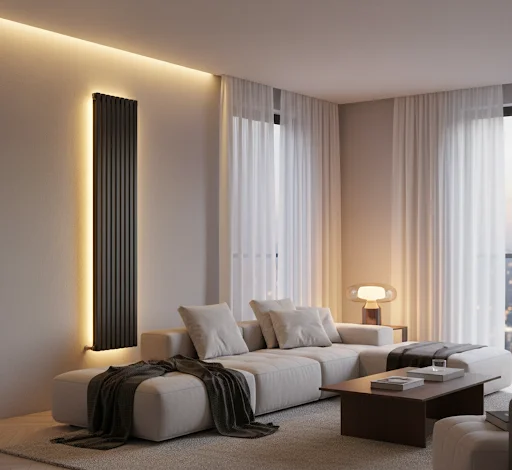
As modern homes become smarter and more connected, the way we manage comfort, ambience, and energy use is rapidly evolving. Heating and lighting have traditionally been treated as separate systems, but when paired together, they create a level of convenience, efficiency, and mood enhancement that transforms everyday living. Integrating your heating setup, whether it’s a traditional system or a designer radiator crafted to complement your interior with smart lighting, allows your home to respond to your routine, warming the rooms you use most, adjusting brightness to match the time of day, and helping you save energy without lifting a finger. This combined approach is becoming a key trend in future-focused home automation.
Below, we explore how these systems work together, the benefits, and practical ways to bring this harmony into your living space.
1. Why Pair Heating with Smart Lighting?
Heating determines how physically comfortable you feel, while lighting shapes emotion, productivity, and ambience. When they function together, they create a balanced environment tailored to both your comfort and lifestyle.
Benefits include:
- Greater energy efficiency through automation
- Improved comfort with coordinated temperature and lighting levels
- Better mood regulation using warm light and warm rooms simultaneously
- Convenience, your home adjusts itself automatically.
- A more cohesive interior atmosphere
This approach mirrors the feeling of stepping into a boutique hotel room with soft lighting, steady warmth, and a sense of calm created through connected technology.
2. Understanding Smart Heating Systems
Smart heating systems allow you to control temperature through apps, voice assistants, or automated schedules. Modern solutions offer advanced features like room-by-room zoning and personalised routines.
Core components:
- Smart thermostats (Google Nest, Hive, Tado, etc.)
- Thermostatic radiator valves (TRVs) that regulate individual rooms
- Low-temperature radiators are ideal for an energy-efficient setup.s
- Heat pumps paired with smart controls.
These systems learn your habits when you wake up, leave the house, or prepare to sleep and adjust the temperature accordingly.
3. Understanding Smart Lighting Systems
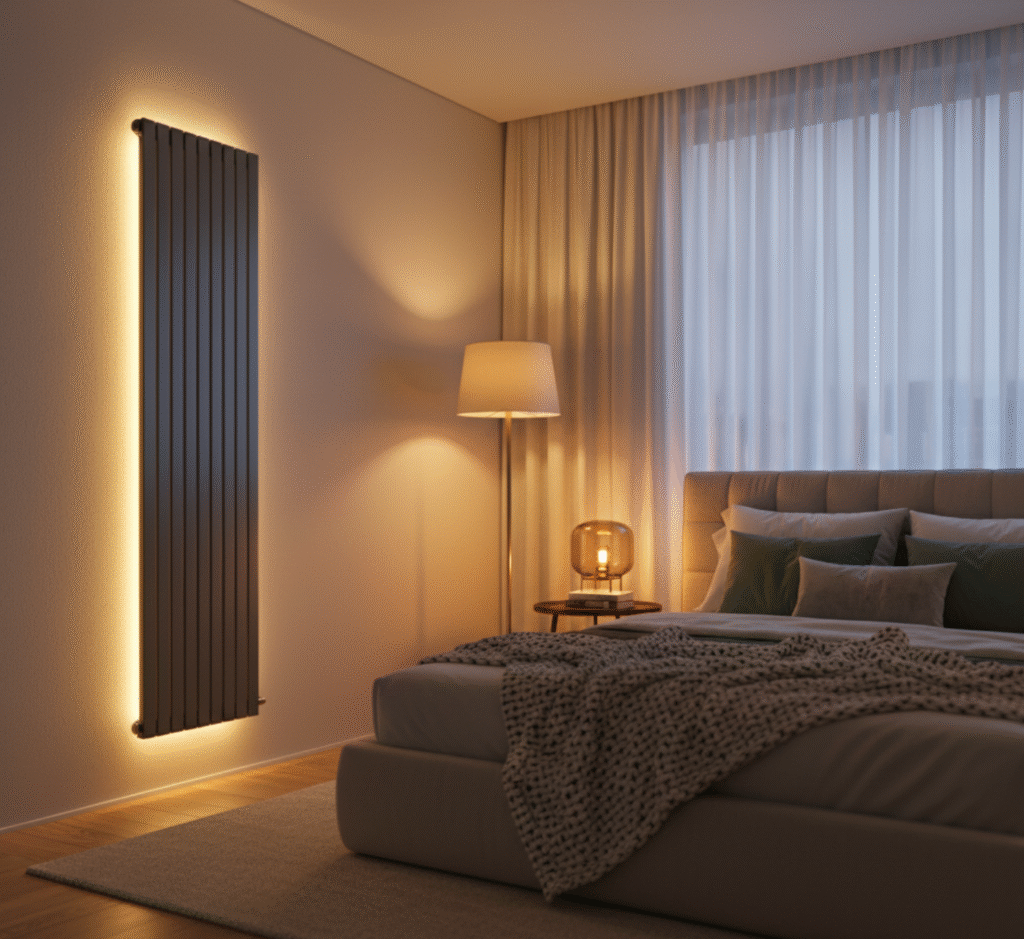
Alt: bedroom with soft lighting
Smart lighting lets you control brightness, colour temperature, and schedules using your smartphone or voice commands. It adds flexibility and enhances the overall feel of your home.
Most common smart lighting features:
- Adjustable brightness and colour
- Scheduling and automation
- Motion sensors for hands-free illumination
- Scene creation (e.g., “Evening Relax”, “Movie Mode”, “Work Focus”)
- Integration with Alexa, Google Home, Siri
When lighting and heating follow the same routine, your home becomes more intuitive.
4. How Heating and Smart Lighting Work Together
The real magic happens when both systems communicate or follow coordinated routines. They work independently, but through automation, they act like one unified comfort system.
Examples of combined functionality:
- Morning Routine
- The heating warms the bedroom and bathroom gradually.
- Lights shift from warm, dim tones to brighter daylight hues.
- The heating warms the bedroom and bathroom gradually.
- Evening Wind-Down
- Heating lowers slightly to promote restful sleep.
- Lighting adjusts to warm, soft amber tones for relaxation.
- Heating lowers slightly to promote restful sleep.
- Away Mode
- Heating drops to eco temperature.
- Lights switch off, or run a security pattern.
- Heating drops to eco temperature.
Pairing them supports not only comfort but also well-being; warmer rooms and warm-toned lighting are proven to reduce stress and help the body unwind.
5. Energy Efficiency: Smart Pairing for Lower Bills
One of the strongest advantages of pairing heating with smart lighting is the reduction in unnecessary energy use.
How it helps:
- Automated schedules: No more heating or lighting empty rooms
- Zoning: Heat only spaces in use, light only where needed
- Sensors: Motion detectors turn lights on/off automatically
- Eco modes: Heating adjusts when sunlight naturally warms a room
- Optimisation: Both systems track energy consumption over time
When lighting becomes part of your heating strategy, your house begins to regulate itself more intelligently.
6. Design and Ambience: Creating Atmosphere with Heat and Light
Lighting and warmth shape how a room feels aesthetically and emotionally. Smart pairing lets you create scenes that complement how you use each space.
Examples of design-led pairings:
Living Room – “Cosy Evening” Scene
- Soft golden lighting at 40–50% brightness
- Gentle background warmth at 20–21°C
- Ideal for reading, relaxing, or hosting friends
Home Office – “Focus Mode”
- Bright, cool-white lighting
- A stable temperature to boost productivity
- Sensors to dim lights when sunlight increases
Bathroom – “Spa Setting”
- Heated towel rail pre-scheduled for shower time.
- Warm white lights or soft blue tones
- Radiant warmth at a comfortable 22–24°C
Heating and lighting, when combined, become key elements of interior decor, not just utilities.
7. Types of Smart Lighting That Pair Well with Modern Heating
Not all lighting systems offer the same level of compatibility. The following types work especially well alongside modern heating:
Smart Bulbs (E27, GU10, B22)
- Easy to install
- Colour-changing and dimmable
- Ideal for living rooms and bedrooms
Smart Light Strips
- Great for behind radiators or shelving
- Create mood lighting that complements warmth
Smart Wall Lights and Lamps
- Add atmospheric warmth
- Excellent for reading corners or lounge areas
Smart Ceiling Panels
- Broad, even lighting for open-plan rooms
Choosing lighting that complements your heating style ensures both systems work aesthetically and practically.
8. Integrating Smart Systems: What You Need
Pairing heating and lighting doesn’t require a full smart home overhaul. A few key components are enough to get started:
Must-Have Components
- A smart hub or app (Hive, Alexa, Google Home)
- Smart thermostat or TRVs
- Smart bulbs or lighting systems
- Wi-Fi connectivity
- Automation routines
Optional Enhancements
- Motion sensors
- Smart blinds (affect natural heat gain)
- Smart plugs for older lamps
- Solar-powered lighting for outdoor zones
Once connected, you can automate everything through routines or voice commands like:
9. Practical Tips for Pairing Heating with Smart Lighting
A few adjustments can maximise the results:
1. Start with One Room
Turn your living room or bedroom into a test space.
2. Match Colour Temperature to Room Heat
- Warm light + warm rooms = relaxation
- Cool light + steady moderate heat = productivity
3. Avoid Overlapping Schedules
Ensure lights and heating don’t conflict with each other’s timing.
4. Use Sunrise and Sunset Automation
Adjust lighting and temperature automatically based on natural light.
5. Pair with Insulation Improvements
Better insulation reduces the workload for both systems.
10. The Future of Connected Home Comfort
The next wave of home design unites heating, lighting, music, and security into a fully adaptive environment. Smart radiators and lighting are at the centre of this movement, helping homeowners create spaces that respond to mood, habit, and lifestyle.
Upcoming trends include:
- Climate-responsive lighting
- AI-driven heating adjustments
- Room sensors that balance heat, light, and air quality
- Low-carbon heating systems with built-in smart controls
As people seek more comfortable, sustainable living, integrated home comfort systems will become the standard, not a luxury.
A Smarter, Warmer, More Atmospheric Home
Pairing your heating with smart lighting systems goes far beyond convenience. It creates:
✔ A more comfortable home
✔ Better ambience day and night
✔ Lower energy bills
✔ Healthier routines and calmer spaces
✔ A seamless, beautifully connected living experience
Whether you begin with a few smart bulbs or a full heating upgrade, this pairing is one of the most impactful steps you can take toward a modern, efficient, and truly personalised home.