
Introduction
Understanding CNC Turning and Milling Services
What is CNC Turning?
CNC turning and milling services is one of the most fundamental machining processes, yet it remains one of the most misunderstood when it comes to supplier selection. Imagine shaping a block of metal the same way a potter shapes clay on a spinning wheel—that’s essentially what CNC turning does, but with far more precision and consistency. The material rotates while a cutting tool removes excess material to achieve the desired cylindrical shape. This method is particularly efficient for producing symmetrical parts such as shafts, bushings, and fasteners.
What makes CNC turning so attractive is its cost-effectiveness. Compared to other machining methods, turning often requires lower machine-hour rates and simpler tooling setups. That’s why it’s frequently used for high-volume production where consistency is key. However, choosing the wrong supplier for turning operations can result in dimensional inaccuracies, poor surface finishes, or even complete batch rejection. Even a small deviation—like a 0.1 mm error—can render a part unusable in critical applications.
The real challenge lies in evaluating whether a supplier truly understands the nuances of turning operations. Are they equipped to handle complex geometries? Can they maintain tolerances across large production runs? These questions often separate a mediocre supplier from a reliable partner. And in an industry where precision equals profit, the difference matters more than you might think.
What is CNC Milling?
If CNC turning is about symmetry, CNC milling is about complexity. Milling involves removing material using rotating cutting tools, allowing manufacturers to create intricate shapes, slots, holes, and contours. It’s the go-to process for parts that require multiple surfaces or complex geometries, making it incredibly versatile across industries.
In fact, CNC milling dominates the machining services market, accounting for approximately 34.2% of total revenue in 2025, thanks to its adaptability and precision. This widespread use highlights just how critical it is to select the right milling supplier. A poorly chosen partner can lead to inefficiencies, increased scrap rates, and costly rework.
Modern milling machines, especially 5-axis systems, can produce highly complex components in a single setup. This reduces handling errors and shortens lead times significantly. But not every supplier has access to such advanced technology. That’s where due diligence becomes essential. You’re not just buying machining services—you’re investing in a capability that directly impacts your product’s quality and your company’s bottom line.
Why Choosing the Right Supplier Matters
Impact on Cost, Quality, and Lead Time
Choosing a CNC supplier isn’t just a procurement decision—it’s a strategic move that can make or break your production process. Think of your supplier as an extension of your own manufacturing team. If they fail, you fail. It’s that simple.
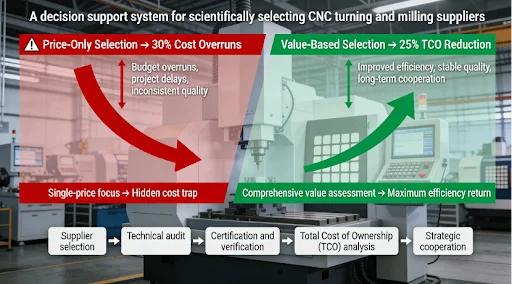
One of the biggest impacts is on cost. While it might be tempting to go with the lowest quote, this often leads to hidden expenses. Poor quality parts require rework, delayed deliveries disrupt your production schedule, and inconsistent performance creates uncertainty. Suddenly, that “cheap” supplier becomes the most expensive mistake you’ve made.
Quality is another critical factor. High-quality machining ensures that parts fit perfectly, function reliably, and meet industry standards. Suppliers with robust quality control systems can detect and correct issues before they escalate. On the other hand, a lack of quality assurance can lead to defective products and damaged reputations.
Lead time is equally important. In today’s fast-paced market, delays can cost you more than just money—they can cost you customers. Efficient suppliers understand the importance of on-time delivery and have systems in place to ensure consistency. They don’t just meet deadlines; they anticipate challenges and plan accordingly.
Market Growth and Industry Demand Insights
The CNC machining industry is booming, and for good reason. The global market is projected to grow at an annual rate of around 5.4%, reflecting increasing demand across sectors like aerospace, automotive, and medical manufacturing.
This growth brings both opportunities and challenges. On one hand, you have access to a wider pool of suppliers. On the other hand, the market is highly fragmented, with no single company controlling more than 3–4% of the global share. That means quality and capabilities can vary significantly from one supplier to another.
Adding to the complexity is the rise of online CNC platforms, which now handle over 50% of RFQs and significantly reduce sourcing time. While these platforms offer convenience, they also require careful evaluation to ensure you’re not sacrificing quality for speed.
Common Costly Mistakes Businesses Make
Focusing Only on Price
It’s human nature to look for the best deal, but in CNC machining, the cheapest option is rarely the best. Many businesses fall into the trap of prioritizing price over everything else, only to face unexpected costs later.
Low quotes often mean compromises—whether it’s inferior materials, outdated equipment, or inadequate quality control. These compromises can lead to higher defect rates, increased scrap, and costly delays. Instead of saving money, you end up spending more to fix the problems.
Ignoring Quality Control Systems
Quality control isn’t just a checkbox—it’s the backbone of reliable manufacturing. Suppliers with strong quality systems use tools like statistical process control and advanced inspection equipment to ensure consistency.
Ignoring this aspect can result in inconsistent parts and unpredictable performance. It’s like driving a car without brakes—you might get away with it for a while, but eventually, it will catch up with you.
Overlooking Production Capacity
Capacity is another critical factor that often gets overlooked. A supplier might have impressive equipment, but can they handle your volume requirements? Can they scale production when needed?
Evaluating capacity involves more than just counting machines. You need to consider factors like automation, workforce efficiency, and material availability. Suppliers with strong capacity planning can handle fluctuations in demand without compromising quality or delivery timelines.
Key Factors to Evaluate CNC Suppliers
Equipment and Technology Capabilities
The foundation of any CNC supplier is their equipment. Advanced machinery, such as 5-axis CNC machines, enables higher precision and faster production. Suppliers that invest in modern technology are better equipped to handle complex projects and deliver consistent results.
Industry Experience and Specialization
Experience matters. Suppliers with expertise in your industry are more likely to understand your specific requirements and challenges. They can offer valuable insights and suggest improvements that enhance efficiency and reduce costs.
Engineering Support and DFM Expertise
Design for Manufacturability (DFM) is a game-changer. Suppliers that provide DFM feedback can help optimize your designs, reducing production costs by 15–25% in some cases.
Transparency and Communication
Clear communication is essential for a successful partnership. Suppliers should be transparent about their processes, capabilities, and limitations. Open communication helps build trust and ensures that issues are addressed promptly.
Quality Assurance and Certifications
Importance of Precision and Tolerances
Precision is the cornerstone of CNC machining. Even the smallest deviation can have significant consequences, especially in industries like aerospace and medical manufacturing.
Inspection and Testing Methods
Advanced inspection tools, such as coordinate measuring machines (CMM), play a crucial role in ensuring quality. Regular audits and performance monitoring help maintain consistency and identify areas for improvement.
Cost Optimization Strategies
Total Cost of Ownership (TCO)
Instead of focusing solely on unit price, consider the total cost of ownership. This includes factors like tooling, inspection, logistics, and potential rework. A slightly higher upfront cost can result in significant savings in the long run.
Hidden Costs to Watch Out For
Hidden costs can quickly add up. These include inspection fees, packaging, and shipping expenses. Understanding these costs upfront helps you make informed decisions and avoid surprises.
Evaluating Lead Time and Scalability
Prototype vs Mass Production
Different stages of production require different capabilities. Prototyping focuses on flexibility and speed, while mass production demands consistency and efficiency.
Supply Chain Stability
A stable supply chain ensures uninterrupted production. Suppliers with strong logistics and inventory management systems can handle disruptions effectively.
Comparing CNC Suppliers
| Criteria | Supplier A | Supplier B | Supplier C |
|---|---|---|---|
| Technology | Advanced 5-axis | 3-axis only | Mixed |
| Quality Control | ISO Certified | Basic | Advanced |
| Lead Time | Fast | متوسط | Slow |
| Cost | High | Low | Medium |
| Scalability | High | Limited | Moderate |
Future Trends in CNC Machining Services
Automation and AI Integration
Automation is transforming CNC machining. AI-driven systems improve efficiency, reduce errors, and enhance precision. These advancements are reshaping the industry and setting new standards for performance.
Online CNC Platforms Growth
Online platforms are revolutionizing procurement, offering faster quotes and access to a global network of suppliers. However, they also require careful evaluation to ensure quality and reliability.
Conclusion
Choosing the right CNC turning and milling services supplier isn’t just about ticking boxes—it’s about building a partnership that drives efficiency, quality, and growth. By focusing on key factors like technology, quality control, and total cost of ownership, you can avoid costly mistakes and achieve better outcomes. The right supplier doesn’t just meet your expectations—they elevate your entire manufacturing process.
READ MOST : https://buzzblog.co.uk/estimators-and-model-designers-ensure-project-precision/