
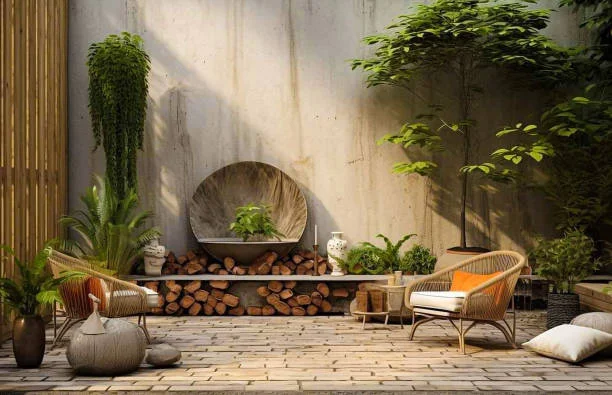
You know that patch in your garden you’ve been ignoring since 2019? The one that’s mostly overgrown and collecting broken plastic chairs for Outdoor space like it’s their final resting place?
Well, it’s time to stop pretending it doesn’t exist. With a bit of planning, that forgotten corner could become the most-used spot in your outdoor space. And no, it doesn’t require a six-figure budget or a TV makeover crew.
Here’s how to do it, step by step.
Start with What You’ve Got
Before you spend a penny or move a single pot, go outside and properly look at your space.
Take note of how the light moves through it during the day. A spot that feels gloomy at 9 am might be flooded with sun by early afternoon, which completely changes what you can do with it.
Think about the shape, the soil type, and what’s already growing there, deliberately or otherwise.
While you’re at it, measure your garden, too. You don’t have to be extremely precise, but having a rough sense of the space will save you from buying a dining set that only fits if everyone eats with their elbows tucked in.
Clear the Mess
Most neglected outdoor spaces are buried under layers of the same items. You might be dealing with old pots, broken tools, weeds that have developed a worrying sense of confidence, and at least one bag of compost that’s been out there for a few years.
Start by removing everything that’s broken, rotting, or simply taking up space without contributing anything.
But if you have overgrown hedges, decades of accumulated debris, or a shed that’s rusted beyond recognition, you should call in professional garden clearance services.
They’ll get through everything in a few hours instead of dragging it out over several long, slightly miserable weekends.
Once the space is clear, you’ll be able to actually see what you’re working with. It’s remarkable how much bigger a garden looks once you’ve removed everything that had no business being there.
Create Zones That Make Sense
A lot of people treat the garden like one big, open room. However, even the smallest space can feel more useful and bigger when it’s broken into areas with a clear purpose.
Think about how you actually want to use the space. A seating and dining area is the obvious starting point for most people. But you might also want a dedicated growing patch, a spot for kids to play, or simply a quieter corner with a single chair and some privacy.
The best part is that you don’t need hard borders or expensive hardscaping. Low raised beds, a simple path of stepping stones, or even a change in surface material are enough to define one area from another.
The trick is to make each zone feel intentional, not like someone just put things wherever there was room.
Pick Multi-Use Upgrades
When you’re choosing what to add to the space, prioritise things that earn their keep in more than one way.
A raised bed, for example, isn’t just for growing food. It defines zones, adds structure, and can double as casual seating if you build it at the right height (around 45–50 cm).
A pergola or simple timber frame works the same way. It gives you somewhere to hang lights, supports climbing plants, and creates that ‘outdoor room’ feel.
Built-in storage that doubles as bench seating is another favourite. It solves the eternal problem of where to put your cushions when it inevitably starts drizzling, which happens all the time in the UK.
In any case, avoid buying things that do only one job. Your outdoor space is precious, and every element should pull its weight.
Plant Hardy Specimens
Once the structure of your space is in place, it’s time to add some plants that’ll make it feel alive. The trick is choosing ones that actually suit your conditions, instead of ones that look good in the garden centre and fade out when summer rolls around.
British native perennials are an excellent starting point. Foxgloves, hardy geraniums, echinacea, and lavender are all relatively low-maintenance, return year after year, and support local pollinators as a bonus.
If you’ve got a shadier spot, ferns and astrantia thrive where other plants give up entirely. For sunnier areas, sedums and ornamental grasses add texture and movement without needing constant attention.
And remember, this is one of the situations where less is more, so don’t overcrowd the space. Plants need room to grow, and a well-spaced planting scheme will always look better than an overstuffed one within a season or two.
Make the Space Comfortable
You can have a garden that looks incredible in photos and still somehow avoid sitting in it. That’s usually a sign that something is off.
Start with your seating. If it doesn’t fit the space properly, you’ll feel it every time you use it. A chunky eight-seater set might look amazing online, but if it leaves you squeezing sideways past the table every time you want a cup of tea, it’ll get on your nerves fast.
Think about shade, too. A parasol, a sail shade, or a simple pergola with a canopy will make a significant difference on warm days and extend the time you can actually use the space.
Finally, add some smaller touches to pull everything together: a few outdoor cushions, a rug underfoot, and somewhere to put your drink without performing a balancing act.
Add Lighting
Once the sun goes down, your garden doesn’t have to disappear with it. Get the lighting right, and it’ll turn into a space you’ll happily sit in long after dark.
Start with the basics so you can actually see what you’re doing. A wall light or a couple of spotlights around your seating area goes a long way, and modern solar options are surprisingly efficient now—no wiring, no fuss.
After that, you can have a bit more fun with it. String lights along a fence or between posts always work, and a well-placed uplight on a tree or shrub will add instant atmosphere without much effort on your end.
If you’ve got a path or stepping stones, a few low lights can make a real difference Outdoor space. They look good, but more importantly, you won’t have to do that careful, slightly panicked walk back to your house while trying not to spill a tray of drinks in the dark.
Conclusion
Your outdoor space shouldn’t be a source of low-level guilt every time you glance out the window.
So, reclaim that forgotten corner, fire up the lighting, and enjoy a space that finally works as hard as you do. After all, the best garden is the one where the only thing you have to worry about is making sure your drink doesn’t go warm in the sun.