
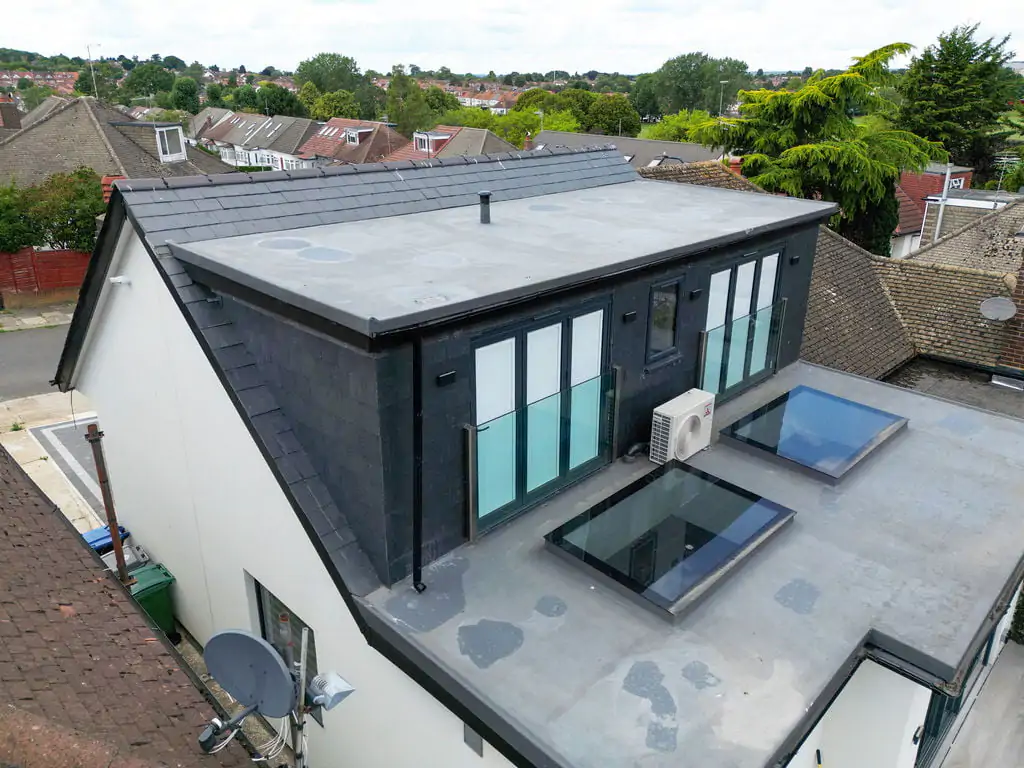
Dormer loft conversions are among the most popular ways London homeowners transform attic space into valuable living areas. Rather than working within existing roof constraints, dormers extend outward creating full-height walls and proper headroom. Understanding what dormer conversions involve, what design options exist, and what they cost helps you determine whether this approach suits your London property. Dormer conversions solve genuine space problems. They’re popular across London neighborhoods. They add valuable bedrooms or offices. They deliver excellent return on investment. Experienced London architects design dormer conversions that enhance properties and gain planning approval.
What Dormer Loft Conversions Actually Are
A dormer is a structural addition extending outward from an existing roof. Rather than living within roof slopes, the dormer creates full-height space. Vertical walls replace sloped ceilings. Proper headroom becomes possible throughout. The dormer sits on the roof slope, supported by the existing roof structure and additional support below.
Dormers vary in design and complexity. Flat roof dormers use simple flat-roofed structures. They’re cheapest option but create less aesthetic integration. Pitched roof dormers match existing roof pitch. They look more integrated. They’re more expensive but more attractive. L-shaped dormers wrap around two sides of lofts. They’re most complex and create maximum space.
The result is habitable space where previously there was only sloped ceiling. Dormers create bedrooms with proper furniture placement. They create offices with adequate desk space. They create playrooms with usable floor area. Space that was previously wasted becomes functional living area.
Why Dormer Conversions Are Popular in London
London properties have valuable attic space. Victorian terraces have substantial roof spaces. Edwardian properties have generous attics. These spaces sit empty in most homes. Dormer conversions utilize this wasted space productively.
Garden space is precious in London. Unlike ground floor extensions consuming garden area, loft conversions preserve gardens. Families get space they need while keeping outdoor areas. This balance appeals to London homeowners valuing both indoor space and outdoor amenity.
Added bedrooms increase property value. London properties command premium prices. Additional bedrooms significantly increase value. Investment pays back substantially. Dormer conversions typically recover costs through property value increase.
Flexible space use creates possibilities. Bedrooms for growing families. Home offices for remote workers. Guest rooms for frequent visitors. Playrooms for children. Hobby spaces for creative pursuits. Space adapts to family needs.
Minimal garden disruption occurs. Unlike extensions requiring site access and disruption to outdoor spaces, loft conversions happen entirely above ground. Gardens remain accessible. Disruption is limited to roofing work.
Dormer Conversion Design Types in London
Rear-only dormers minimize front appearance impact. Property looks mostly unchanged from street. Planning approval often easier. Popular in Conservation Areas where front preservation matters. Rear dormers still create significant internal space.
Pitched roof dormers match existing roof pitch. They look more integrated with existing buildings. They add more headroom than flat roofs. They cost more but look better aesthetically. Most visually successful dormer type.
Flat roof dormers are simplest. A flat-roofed structure extends from the roof. Creates usable space but less headroom than pitched options. Cheaper than pitched dormers. Less aesthetically integrated.
L-shaped dormers wrap around two sides of the loft. They add significant space and headroom. More complex structurally. More expensive. But create much more usable space than simple dormers.
Full-width dormers extend entire width of property. Maximum space gained. Maximum visual impact. Planning approval challenging. Dramatically transforms properties. Most expensive dormer option.
Side dormers extend along property sides. Create additional space. More visual impact than rear-only. Sometimes face Planning Permission requirements.
Dormer Conversion Costs in London
In London, dormer loft conversion costs vary by type and location.
Flat roof dormers typically cost 25000 to 35000. Creates moderate additional headroom. More space than simple conversions. Modest cost increase for space gain.
Pitched roof dormers typically cost 30000 to 45000 in London. Better appearance than flat roofs. More headroom. Aesthetic integration with existing buildings. Cost premium reflects design quality.
L-shaped dormers typically cost 35000 to 55000 in London. Wraps around two sides. Significantly more space. More complex structurally. Substantially higher cost reflects complexity.
Rear-only dormers typically cost 28000 to 42000. Minimizes visual impact. Often easier planning approval. Cost varies based on size and complexity.
Full-width dormers typically cost 45000 to 65000 in London. Maximum space. Maximum visual impact. Significantly higher cost reflects complexity.
Outside London, costs are substantially lower. South East typically costs 20 to 25 percent less. Midlands costs 30 to 40 percent less. Northern regions cost 40 to 50 percent less than London.
| Dormer Type | Headroom Gain | Complexity | Planning Approval | Typical Cost | Timeline |
| Flat Roof | Moderate | Low-Med | Often exempt | £25-35k | 10-12 weeks |
| Pitched Roof | Good | Medium | Sometimes | £30-45k | 11-13 weeks |
| L-Shaped | Excellent | High | Sometimes | £35-55k | 12-14 weeks |
| Rear-Only | Good | Medium | Often exempt | £28-42k | 10-12 weeks |
| Full-Width | Maximum | High | Usually required | £45-65k | 13-16 weeks |
Dormer Loft Conversion Design Excellence
Good dormer design maximizes headroom. Dormers are positioned where needed most. Sloped areas become storage or dressing spaces. Result is functional living space despite roof slopes.
Light is essential. Dormer windows bring light into extensions. Rooflights in flat areas bring daylight. Positioning matters for views and light quality.
Ventilation prevents stuffiness. Openable windows provide fresh air. Mechanical ventilation supplements. Modern standards require proper ventilation.
Storage uses sloped areas efficiently. Under-roof storage works well. Custom shelving uses awkward spaces. Built-in furniture maximizes functionality.
Flooring matters. Proper insulation below prevents heat loss. Materials should match existing floors.
Color and finishes create spaciousness. Light colors feel larger. Reflective surfaces help light travel. Strategic lighting creates comfort.
Bathroom placement matters. Sloped areas don’t suit bathrooms. Dormer areas work better. Proper drainage must function.
London Dormer Planning Requirements
Many dormer conversions qualify for Permitted Development. External appearance mustn’t change materially. Simple rear dormers often qualify. Front dormers face more scrutiny.
In Conservation Areas, dormers face stricter requirements. Design must respect area character. Materials must match. Front dormers rarely get Permitted Development approval.
Listed buildings require Listed Building Consent. Dormers are changes to listed structures. Consent is difficult to obtain.
Professional assessment determines whether Permitted Development applies.
Extension Architecture: Dormer Specialists
Extension Architecture specializes in London dormer conversions. They understand different property types. They know what works on various London buildings.
They assess whether Permitted Development applies. They navigate Planning Permission when needed. They get approvals efficiently.
They design with headroom in mind. They maximize space creatively. They solve structural challenges.
They manage projects professionally. Site supervision ensures quality. Communication is clear. Problems are solved collaboratively.
For your London dormer conversion, Extension Architecture provides expertise you need. Contact them for consultation on transforming your attic space.