
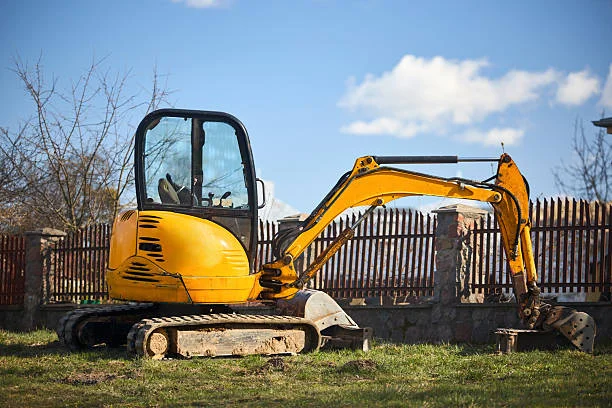
Construction work rarely follows a fixed sequence anymore. Site conditions shift as work progresses. Access routes change. Ground conditions vary across short distances. These factors place pressure on both planning and execution. A backhoe loader addresses this by allowing teams to respond without stopping work. It handles excavation and loading in a single cycle. The operator does not need to wait for another machine to take over the next step.
This approach reduces hesitation on site. Work continues with fewer interruptions because one machine carries the task forward. Teams spend less time organizing equipment movement and more time completing actual work. That difference becomes clear on constrained sites where space and time remain limited.
What Defines True Versatility in a Loader on Site?
Versatility shows itself in how a machine performs under changing conditions. It is not limited to the number of functions listed in a manual. A loader proves its value when it moves from one task to another without losing control or accuracy. The operator adjusts the machine’s position and function in a single flow. This keeps the process steady.
Consistency matters more than range. A machine that performs several tasks reliably holds more value than one that attempts many functions without control. Operators rely on predictable behavior. They need to know how the machine will respond in tight spaces or uneven ground. That confidence allows them to work without second-guessing each movement.
Versatile Loaders Reduce Delays Caused by Equipment Dependency
Sites that rely on multiple machines often face small delays that accumulate over time. One machine completes its part and then waits. Another arrives late or requires repositioning. These gaps interrupt the rhythm of work. A versatile loader removes much of this dependency. One operator completes connected tasks without handing control to another machine.
This also changes how space is used. Fewer machines move across the same area. Congestion reduces. The site becomes easier to manage because fewer movements overlap. This does not eliminate all delays, yet it reduces those caused by coordination between machines. The workflow remains more stable as a result.
Can One Machine Handle Multiple Roles?
A single machine cannot replace every specialized unit. That expectation does not reflect how construction operates. The strength of a versatile loader lies in handling routine tasks that form the bulk of site activity. It manages digging, loading, and basic handling without requiring constant support.
On many projects, this level of performance proves sufficient. The machine completes each stage with steady output. It does not aim to match the peak capability of specialized equipment. Instead, it maintains continuity. That continuity reduces the need to pause work while switching machines. Efficiency improves because the process moves forward without breaks.
Project Timelines Benefit from Integrated Machine Functions
Time pressure shapes every construction decision. Delays at one stage affect the entire schedule. When tasks depend on separate machines, each transition introduces risk. Equipment must arrive on time. Operators must coordinate their work. A delay at any point slows progress.
Integrated functions reduce this exposure. A versatile loader completes related tasks in sequence. The operator controls the pace. This removes several points where delays usually occur, and the schedule becomes easier to manage.
Versatile Loaders Support Surface Preparation Before Compaction Begins
Surface preparation requires attention to detail. Uneven ground or poorly distributed material affects the next stage of work. A loader prepares the surface by placing and adjusting material where needed. It removes irregular sections and ensures a consistent base.
Once this stage finishes, compaction follows. Equipment such as tandem rollers depends on a stable surface to apply pressure evenly. If the preparation stage lacks precision, compaction cannot correct it fully. The loader plays a direct role in setting this foundation. It ensures that the surface supports the next process without repeated correction.
Do Versatile Loaders Actually Reduce Operational Costs?
Cost reduction does not come from using fewer machines alone. It comes from how efficiently those machines operate. A versatile loader reduces the need for additional equipment. This lowers fuel consumption, transport requirements, and maintenance demands.
Labor costs also shift. Fewer operators are required to complete connected tasks. Over time, these adjustments affect the overall project cost. Savings appear gradually through reduced waste of time and resources rather than through a single change.
Conclusion
Modern construction demands steady progress across changing conditions. Equipment must support this without creating additional complexity. Versatile loaders meet this need by maintaining continuity across different tasks. They reduce reliance on multiple machines and simplify how work moves from one stage to the next.
Their role connects with later stages as well. After preparation and compaction, finishing work often involves equipment such as double drum rollers. The earlier work completed by the loader ensures that these final stages proceed on a stable base. Each phase builds on the previous one without disruption.
This shift explains why versatile loaders now hold a central place on complex builds. They support practical decision-making on site. They allow teams to respond to real conditions rather than fixed plans. That ability defines their growing importance.